Atlassian Guard setup and IdP integration in Singapore and California.
Information Officer is a certified Atlassian Solution Partner that helps organisations in Singapore and California configure Atlassian Guard — the security layer that adds enterprise identity management, data loss prevention, and threat detection to your Atlassian Cloud environment.
We connect your identity provider (Okta, Microsoft Entra ID, Google Workspace, or others), configure SSO and SCIM user provisioning, design authentication policies, and implement data security controls — so your Atlassian platform is governed, auditable, and secure at scale.
What Atlassian Guard provides
Atlassian Guard extends Atlassian Cloud's built-in security with four layers of enterprise-grade protection — spanning identity, access, data, and threat management.
Single sign-on (SSO)
SAML 2.0 SSO across all Atlassian Cloud products — users authenticate through your identity provider, eliminating separate Atlassian passwords and enforcing your organisation's authentication standards.
User provisioning (SCIM)
Automatic account creation, updates, and deactivation synced from your identity provider — so Atlassian access reflects your HR system in real time, with no manual user management.
Data loss prevention
Data classification levels, security policies controlling exports and public links, and controls blocking third-party app access to sensitive Confluence spaces and Jira projects.
Threat detection (Premium)
Alerts on suspicious user activity, sensitive data detection in Confluence and Jira, data redaction, and audit log streaming to Splunk, Microsoft Sentinel, or any SIEM via webhooks.
Guard Standard
Visibility and control at scale
Enterprise-grade identity and access management for growing organisations.
- SSO via SAML 2.0
- SCIM user provisioning from IdP
- Authentication policy management
- API token management & expiration
- Data classification levels
- Data security policies (DLP)
- Organisation audit log
Guard Premium
Advanced protection and threat detection
Everything in Standard, plus deeper detection and response for high-value data.
- Everything in Guard Standard
- Suspicious activity alerts
- Sensitive data detection
- Data redaction
- Centralised alert management
- Audit log streaming to SIEM
- Incident response workflows
Our Atlassian Guard services
From domain claiming and IdP connection through to data security policies and SIEM integration — we deliver end-to-end Atlassian Guard implementations for organisations in Singapore and California.
Guard Standard Setup
Domain claiming, IdP connection (SAML SSO + SCIM provisioning), authentication policy configuration, API token controls, and end-to-end testing of the provisioning and sign-on flow.
Guard Premium Setup
Everything in Standard plus data classification policy design, threat detection rule configuration, alert tuning, SIEM integration via webhook streaming, and incident response workflow setup.
Identity Provider Integration
Connect Okta, Microsoft Entra ID (Azure AD), Google Workspace, OneLogin, or any SAML 2.0 / SCIM 2.0-compatible IdP to your Atlassian Cloud organisation — including attribute mapping and group sync configuration.
Authentication Policy Design
Design policies for managed accounts (internal users), external users, and service accounts — covering SSO enforcement, MFA requirements, session duration, API token restrictions, and bypass rules for edge cases.
Data Security Policies
Define classification levels and implement DLP policies — controlling data exports, public links, anonymous access, and third-party Marketplace app access to sensitive Confluence spaces and Jira projects.
Audit Log & SIEM Integration
Configure Guard Premium's webhook-based audit log streaming to Splunk, Microsoft Sentinel, Google Chronicle, Zscaler, or any compatible SIEM — including event filtering, alert routing, and escalation path definition.
Ready to secure your Atlassian Cloud environment?
Whether you're connecting your first identity provider or rolling out Guard Premium with SIEM integration, our certified Atlassian consultants in Singapore and California are ready to help.
How we work
A structured implementation approach that avoids common Guard pitfalls — particularly around external users, service accounts, and authentication policy rollout sequence.
- 1
Assess
Review your current Atlassian organisation — claimed domains, user accounts, external collaborators, service accounts, existing authentication setup, and integration requirements. Identify the right Guard plan and configuration approach.
- 2
Plan
Design the SSO/SCIM configuration, IdP attribute mappings, authentication policy rules, and provisioning group structure. Agree the rollout sequence — including how to handle external users, contractors, and service accounts without breaking access.
- 3
Configure
Claim your domain, connect your identity provider (SAML SSO + SCIM), configure authentication policies, and test the full provisioning and sign-on flow with a pilot user group before rolling out to the full organisation.
- 4
Govern
Implement data classification levels and security policies for sensitive Confluence spaces and Jira projects. For Guard Premium: configure threat detection rules, tune alert thresholds, and set up audit log streaming to your SIEM.
- 5
Enable
Train Atlassian administrators on Guard operations — ongoing user management via SCIM, policy updates, alert investigation, and audit log access. Provide runbooks and a post-deployment hypercare period.
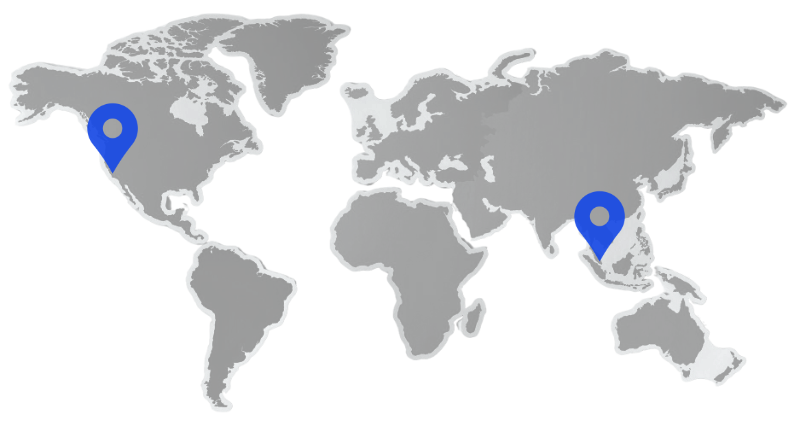
Our Offices
We maintain a strong global presence with offices in California, New York, and Singapore, enabling us to deliver seamless, localised support and strategic solutions across key markets.

Singapore
Information Officer Pte Ltd
1002 Jalan Bukit Merah #06-19
Singapore 159456
+65 8086 7376 (WhatsApp)
San Fransisco, California
Information Officer LLC
PO Box 5021
Berkeley, California 94705, USA
+1 (212) 913-0469
Trusted by businesses around the world








Our technology partners








Frequently asked questions
What is Atlassian Guard?
Atlassian Guard is a security subscription for your Atlassian Cloud organisation that adds enterprise-grade identity management, data loss prevention, and threat detection. It provides tools for provisioning users from an identity provider, enforcing SSO, controlling authentication policies, classifying and protecting data, detecting suspicious activity, and streaming audit logs to a SIEM. Available in two plans: Guard Standard and Guard Premium.
What is the difference between Atlassian Guard Standard and Guard Premium?
Guard Standard covers identity and access management — SSO (SAML 2.0), SCIM user provisioning, authentication policies, API token management, data classification, and DLP policies. Guard Premium adds active threat detection and response — suspicious activity alerts, sensitive data detection, data redaction, centralised alert management, and audit log streaming to SIEM tools such as Splunk, Microsoft Sentinel, and Zscaler. Guard Premium is recommended for organisations handling sensitive or regulated data that need active monitoring and incident response.
Which identity providers does Atlassian Guard support?
Atlassian Guard supports any SAML 2.0-compliant IdP for SSO and any SCIM 2.0-compliant provider for user provisioning. Commonly used IdPs include Okta, Microsoft Entra ID (Azure AD), Google Workspace, OneLogin, PingIdentity, and JumpCloud. For Singapore Government organisations, TechPass (built on Entra ID) can be used as the IdP for Atlassian Cloud environments including SHIP-HATS.
What is the difference between SSO and SCIM in Atlassian Guard?
SSO controls how users authenticate — instead of a separate Atlassian password, users log in through your identity provider via SAML 2.0. SCIM controls user lifecycle management — automatically creating, updating, and deactivating Atlassian accounts when users are added, changed, or removed in your IdP. Both are configured separately and work together: SCIM ensures the right accounts exist, SSO ensures they authenticate through your IdP.
Do we need to claim our domain before setting up Atlassian Guard?
Yes. Domain claiming is a prerequisite for Atlassian Guard. You must verify ownership of your organisation's email domain in Atlassian Admin before you can manage accounts on that domain, enforce authentication policies, or set up SSO and SCIM provisioning. The process involves adding a DNS TXT record or uploading an HTML file to your domain. We handle domain claiming as part of every Guard setup engagement.
How does Atlassian Guard handle external users and contractors?
Atlassian Guard lets you define separate authentication policies for managed accounts (on your claimed domain) and external users (on other domains). You can enforce SSO for internal users while allowing external collaborators to use Atlassian authentication or a separate policy — with different MFA requirements, session durations, and API token rules per policy. Designing the right external user policy is one of the most important — and most frequently overlooked — steps in a Guard implementation.
Can Atlassian Guard integrate with our SIEM?
Yes — this is a Guard Premium capability. Guard Premium supports real-time audit log streaming via webhooks to tools including Splunk, Microsoft Sentinel, Google Chronicle, and Zscaler. Guard Premium threat detection alerts can also be forwarded to your security operations workflow. We configure the streaming connection, validate event delivery, and help define alert routing and escalation paths.
How long does an Atlassian Guard implementation take?
A Guard Standard implementation — domain claiming, IdP connection (SSO + SCIM), and authentication policy configuration — typically takes 2–4 weeks. A Guard Premium implementation adding data classification, DLP policies, threat detection configuration, and SIEM integration typically takes 4–8 weeks. Timeline depends on the complexity of your IdP environment, the number of Atlassian products in scope, and the number of user types and external collaborators to account for.
Your Atlassian Guard partner in Singapore & California
From first-time SSO setup to Guard Premium with full SIEM integration — our certified Atlassian consultants deliver secure, well-governed Atlassian Cloud environments.